

Meet & Greet on the topic ‘The Children’s Rights Index 2025 — Where do the federal states stand?’ on June 17, 2026
An online meeting will take place on June 17, 2026, from 3:00 PM to 4:00 PM, to which the Children’s Rights Network invites you.
In the Meet & Greet, the German Children’s Fund presents the index. The development and preparation of the index, central results, and resulting political conclusions will be explained. Afterwards, the potential, limits, and benefits of the instrument can be discussed and individual topics deepened.
See the invitation from the Children’s Rights Network here
Bonding Analysis Conference June 19–21, 2026
9th Bonding Analysis Conference on the topic: Connected from the very beginning — the power of the prenatal relationship
This conference is not centered around the 9th month of pregnancy, but rather around everything that happened to the child internally since and with the connection of sperm and egg. The decision of György Hidas, the founder of Bonding Analysis alongside Jenö Raffai, that Bonding Analysis as a preventive method is a “Copernican revolution,” remains consistent.
Bonding Analysis as a preventive method places the intrauterine child at the center and helpfully accompanies them in their space. For the two inventors, it was not about adding new theories to knowledge. The language of this method could therefore not be that of the exact sciences, which belongs solely to the adult world.
It could only arise in great openness to earlier and new internal movements during pregnancy in the mother and father of the new being. A bonding analyst helps to maintain this openness. Time and again, we hear from bonding analyses how the baby pulls the mother into its living space with one finger and she is happily with it, even if she unexpectedly feels very tiny compared to a large child. A mother, a father can become friends with their baby and perceive its movement as body language. They can be there for the little one as help from their perspective of life. The baby gladly offers this to them and wants to feel held and loved. Yet within it are many other voices of its heritage, as in every human being, which it moves within itself in its life.
The Bonding Analysis Association cordially invites you to explore this polyphony of human life at the conference and to respect the power of the intrauterine child for bonding in a new way.
Prices see flyer, registration: www.bindungsanalyse.de/aktuelles/

Online Annual Conference of the GPPP, June 27–28, 2026
Topic: Understanding wars — and what can be done about them
Does the “nightmare of history” with its enormous violence in societal structures and the succession of wars interact with the equally enormous aspects of violence in parent-child relationships throughout history, i.e., the “nightmare of the history of childhood,” as researched within psychohistory in recent decades?
The answer of psychohistory, the research of psychological aspects in historical events, is a clear “yes,” as presented in the book “The Emotional Life of Nations” by the founder of modern psychohistory Lloyd deMause and also summarized in the conference proceedings of the “Society for Psychohistory and Political Psychology” in Germany (www.psychohistorie.de, www.mattes.de).
By bringing together different research fields, such as in particular the research into the life-historical development of the human brain and the psychological development interacting with it, we can today better understand these dark shadows of the primate Homo sapiens, who is so successful in its kind as a culture-creator.
If in history war was even considered a cultural institution, then later a visitation to be accepted as fateful, and in recent years increasingly openly as a social crime, this is associated with an increasing understanding that wars are initiated by individuals and social groups in a conflict dynamic that is understandable today. A key aspect is that due to birth in a state of neurological immaturity and the associated dependence on socialization conditions, the earliest impairing traumatizations play a major role and can deeply affect the emotional personality maturity of individuals and also of entire social groups. These traumatizations then lead to conflicts very quickly appearing solvable only through violence, which on a social level then means war.
This new and expanded understanding of the psycho- and sociodynamics of wars will be presented and explained in individual steps at the conference.
Prices and further information here

Congress “Hand in Hand for Respectful Birth: physiological — psychological — empathetic — safe” October 9–11, 2026
We are pleased to announce the 2nd international interdisciplinary congress “Hand to Hand for Respectful Birth”, which will take place from October 9–11, 2026, in Istanbul. It is organized by the ‘Hand in Hand for Birth Association’, the Turkish independent midwives’ association, the ISPPM, APPAH, Prenatal Alliance, and the Prenatal Sciences Partnership.
In-person event from October 9 to 11, 2026, Fatih Sultan Mehmet Vakif University, Halic Campus, Istanbul, Turkey.
“Online Program” – September – October – November 2026, every Monday and Thursday. The full program will be announced shortly…
“Congress Chairs” Dr. Hakan Coker, Gynecologist; Neslihan Sebik, Midwife; Nese Karabekir, Birth Psychologist.
This interdisciplinary congress brings together obstetricians, midwives, birth psychologists, prenatal psychologists, doulas, childbirth educators, and researchers to discuss physiologically based, compassionate, and evidence-based models of birth care.
We focus on humanistic obstetrics, trauma-informed approaches, and better outcomes for mothers through respectful practices.
“Keynote and Guest Speakers” from Turkey and abroad will present clinical cases, research findings, and innovative care models.
The program includes scientific sessions, panel discussions, workshops, and networking opportunities both on-site and online.
Registration:
Early bird price: €150 until July 15
Regular price: €300
The registration fee applies to participation both online and on-site. No separate registration is required for online participation. You will have access to the video recordings for 3 months after the congress.
Our website regarding the conference is currently under construction. All information on registration, accommodation, and the program will be announced shortly via email.

ISPPM Conference October 30 — 01.11. 2026 in Stolpen “Bonding Hormone Oxytocin”
Between Opportunity for Bonding Promotion and Abuse as a Birth Intervention
A new concept has been developed for the Oxytocin conference: the speakers will talk and discuss the various professional aspects of oxytocin in the structure of symposia. Through this lively form, exchange, experience, and information become easily and actively accessible. The conference will be broadcast online; active participation of online participants is not possible. Please refer to the flyer for the program; small changes may still occur. And here is the content:
Oxytocin is a key hormone of our neurotropic system, which significantly regulates and harmonizes central areas of our social competence, our capacity for bonding and love, sexuality, pain regulation, and other important bodily functions. Oxytocin is a messenger of love, happiness, bonding, closeness, and peace. There are many reasons to protect this hormone.
Oxytocin is also an important hormone in the regulation of birth. During the expulsion period, it ensures a firm muscle tone of the uterine wall, against which the child
can move out. It relieves the labor pain for the woman giving birth and makes the actually unbearable bearable. After birth, it ensures the contraction of the uterus and thus prevents postpartum hemorrhage. It strengthens the bond between mother and child and enables
breastfeeding.
Unfortunately, the contraction-promoting properties of oxytocin were and are also abused as a birth intervention to induce labor and to
accelerate the birth process. In doing so, the highly sensitive mechanisms of oxytocin release and the danger of a downregulation of the receptor system in mother and child were underestimated despite the data situation available for decades – with serious consequences for bonding and breastfeeding.
The 38th Annual Conference of the ISPPM is aimed at all professional groups active in psycho- and body therapy, bonding promotion, and obstetrics. It is entirely dedicated to the
diverse aspects of use as a bonding-promoting hormone and the abuse of an important resource for our physical, psychosocial, and sexual health.
Registration will soon be possible via our homepage.
Heide Congress — Webinars
Something new has grown out of the special atmosphere and inspiring dynamics of the 1st Heide Congress:
the Heide Congress Webinars
What began there is now being continued: continuously and in depth.
The Heide Congress Webinars will become an easily accessible, far-reaching, lively, and continuous educational platform for everyone who wants to further think through important impulses from
science and practice together and carry them into their own practice.
In the future, webinars will take place 5–6 times a year – intensive, personal, and practice-oriented.
See webinar offers here / See registration here
Preterm Forum: Online Specialist Conference ‘Nutrition of Preterm Infants’
On September 26 and 27, 2026, you can expect keynote speeches, discussion rounds, workshops, and a World Café
Nutrition is so much more than the mere administration of food. Empathetic and reflective handling of preterm infants during the intensive care acute phase can significantly contribute to children, especially those who are very immature initially, developing a healthy attitude towards eating. However, practical experience also shows how susceptible this sensitive initial phase is and what long-term burdensome consequences can arise from it.
Together, in an interdisciplinary exchange, we want to examine what we already know, what we can do better, what form of education and sensitization of the social environment is necessary, what disadvantageous long-term consequences arise from initial burdensome situations, and how these can be overcome.
For further information, see the flyer. See flyer here
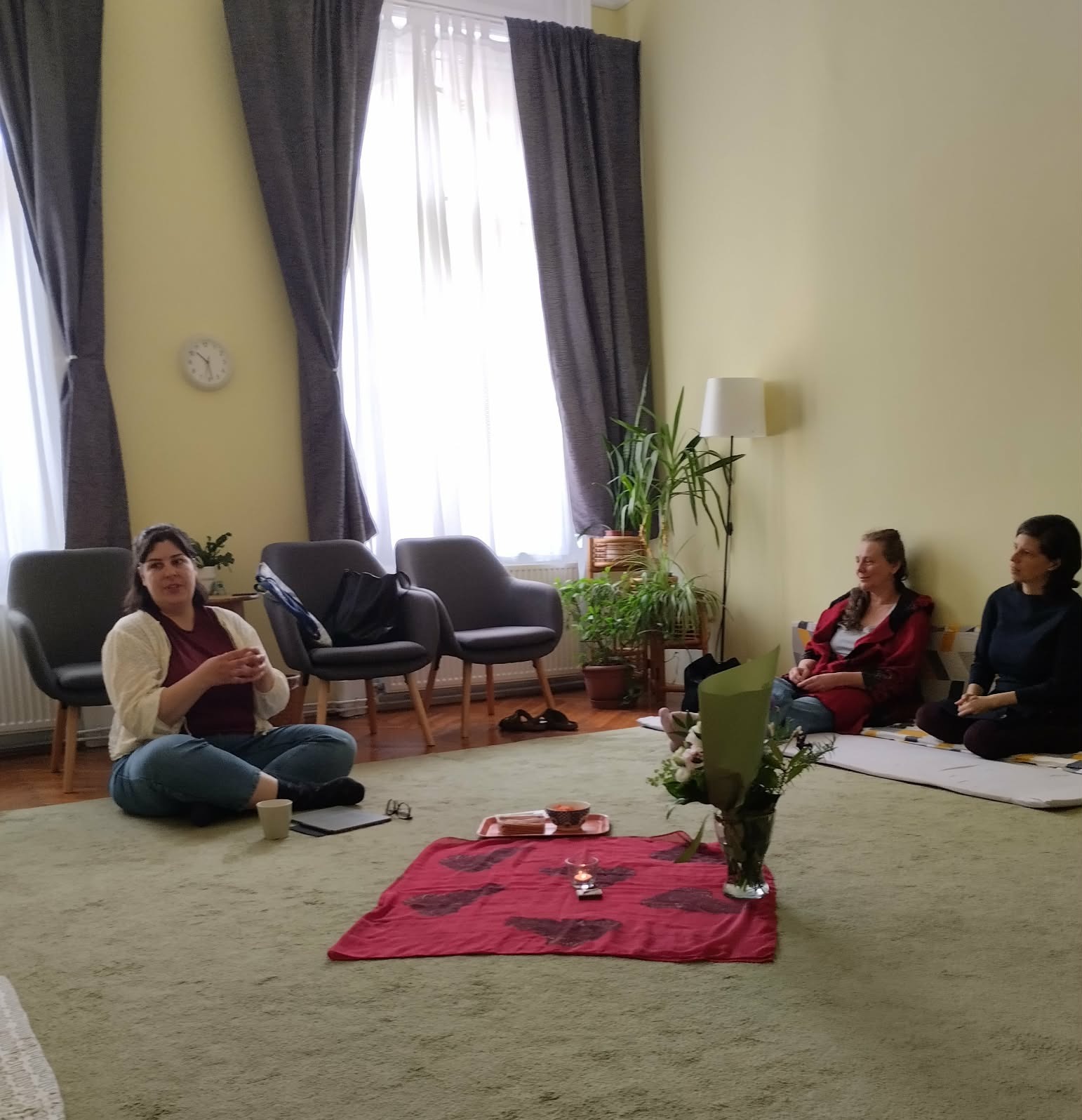
Board Member Martina Takacs at the Perinatus Foundation in Budapest
Martina Takacs visited the Perinatus Foundation on May 9; here is her report:
In May, I had the pleasure of visiting the Perinatus Foundation in Budapest, Hungary, to present best practices and a systematic overview of the German perinatal care system. The focus was on central pillars of family support in Germany – including midwifery, the crying baby clinic, Early Help, the help hotline, and the baby pilots. The participants – psychologists, counselors, and integrative baby therapists who work closely with families in perinatal life phases – enriched the discussion with diverse professional perspectives. We exchanged ideas intensively on best practices and together explored possibilities for future cooperation. This visit took place as part of an Erasmus+ project.
You can obtain more information about the foundation here.
International Roundtable for Human Rights in Childbirth – IPOV Meeting, June 5, 2026
Board Member Martina Takacs participated in the Roundtable for Human Rights in Childbirth; here is her report:
On June 5, I had the opportunity to participate in the International Roundtable for Human Rights in Childbirth – IPOV Meeting, an enriching online event that brought together experts from all over the world – including Italy, Spain, Argentina, Norway, England, and Uruguay. The professional teams shared their approaches to dealing with obstetric violence and presented best practices for the interdisciplinary training of colleagues in the healthcare sector. It was inspiring to experience the diversity of perspectives, and the event provided valuable insights into how different countries are working to strengthen human rights around childbirth.
For further information (in English) about the IPOV see here
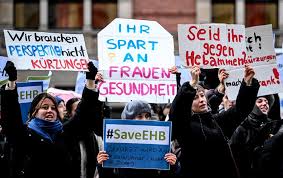
Open letter to the EU Parliament from European associations for the revision of standards for the midwifery profession
Following the restrictive measures in Turkey, Greece, Germany, and Poland, and since the last revision was many years ago, midwifery professional associations from all over Europe have written an open letter to the EU Parliament and President Ms. von der Leyen.
It is about the preservation of midwifery work and its area of competence, which after many years must be updated to the conditions of the current time.
Read the full, detailed letter here…
Together with representatives from GreenBirth, we are writing a statement on the new midwifery assistance contract, which came into force on November 1, 2025. In addition to improvements in some areas, e.g., for home birth midwives, care in prenatal and postnatal care and the profession of the attending midwife have collapsed and are severely endangered. Since attending midwives have income losses of between 30–40%, many have switched to employment.
A Tagesschau report from November 29, 2025, about the new midwifery assistance contract and the consequences:
https://www.tagesschau.de/inland/gesellschaft/hebammen-studie-existenzaengste-100.html
Through tireless pressure and months of intensive discussions with the GKV-Spitzenverband as well as with political support, the German Midwives Association was able to achieve some important improvements for the attending teams. Here you can read the press release of the Midwives Association from March 16, 2026.

Counseling Center for Natural Birth and Parenting e.V. is looking for a new course instructor
The GfG is looking for a new course instructor at the counseling center in Munich:
Course instructor (m/f/d) on a fee basis for postnatal & reorientation courses
Desired are:
- Completed further training as a GfG postnatal/reorientation course instructor
- Initial experience as a GfG postnatal/reorientation course instructor
- Time for one or more courses per week
Networking meeting
For all those who could not be there — the recording of the network meeting with Franz Renggli on the topic “Our Earliest Injuries” is now available as a video
July 2, 2026, 7 PM CET
Prof. Dr. Sven Hildebrandt:
Accompanying the pregnant woman in the birth period – a challenge to competence, care, and patience
The rate of artificially induced births in Germany is now well over 20% and is continuously increasing. A very large part of these labor inductions occurs because a certain gestational age has been reached and is thus not sufficiently medically indicated. This problem is therefore one of the most important challenges of modern obstetrics and is at the same time one of the greatest risk factors.
The speaker deals in detail with the causes of the high induction rate, with misunderstood scientificity, with the dangers of this practice, and with possible ways out. He goes into detail about strategies for avoiding unnecessary labor inductions and the perspective of prenatal psychology on this problem.
Free for members, non-members pay €12.
July 9, 2026, 7:00 PM CET
Network meeting of German associations for a respectful birth culture, interested parties are cordially welcome. Registration via office: info@isppm.ngo
The planned symposium with L. Janus, U. Auhagen-Stephanos, W. Emerson: “Prenatal Psychological Aspects of Artificial Insemination” must unfortunately be postponed
July 16, 2026, 7 PM CET
Regina Bücher: The first days of an embryo and the “Somatic Blueprint”,
The first days of an embryo shape all further development. Everything is stored in our cellular memory. The imprinting is like a veil through which we perceive ourselves, our lives, and the world.
But under this “veil,” even deeper in the body memory than the imprinting, is our healthy original pattern, the Somatic Blueprint. Inside, we have a deep knowledge of our health.
This network meeting is about the connection between imprinting and health, beginning in the first days of an embryo.
At the same time, this offers a small insight into the foundation of “Integrating Pre- and Perinatal Experiences” in the tradition of Ray Castellino.
Free for members, non-members pay €12.
July 28, 2026, 7:00 PM CET
Network meeting of international associations around pregnancy and birth, interested parties are cordially welcome (in English). Registration for interested parties via: info@isppm.ngo
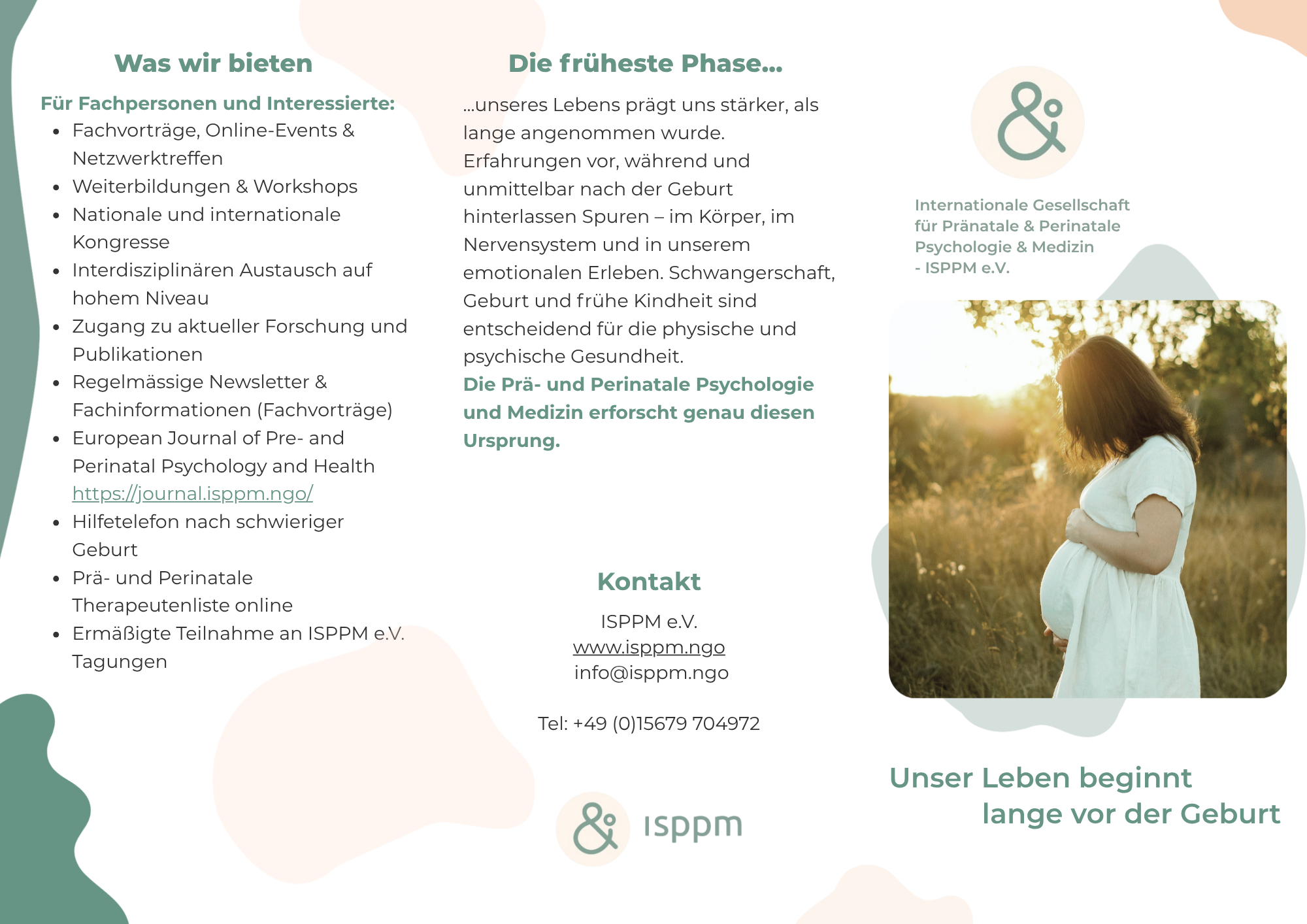
Flyers in the new design
The flyers in the new design are here. The texts have been revised and updated and adapted to the design of the new website — together with ISPPM Switzerland. Please let us know if you have the opportunity to display and distribute flyers. Email with desired quantity and address to: elfi.elliot@isppm.ngo
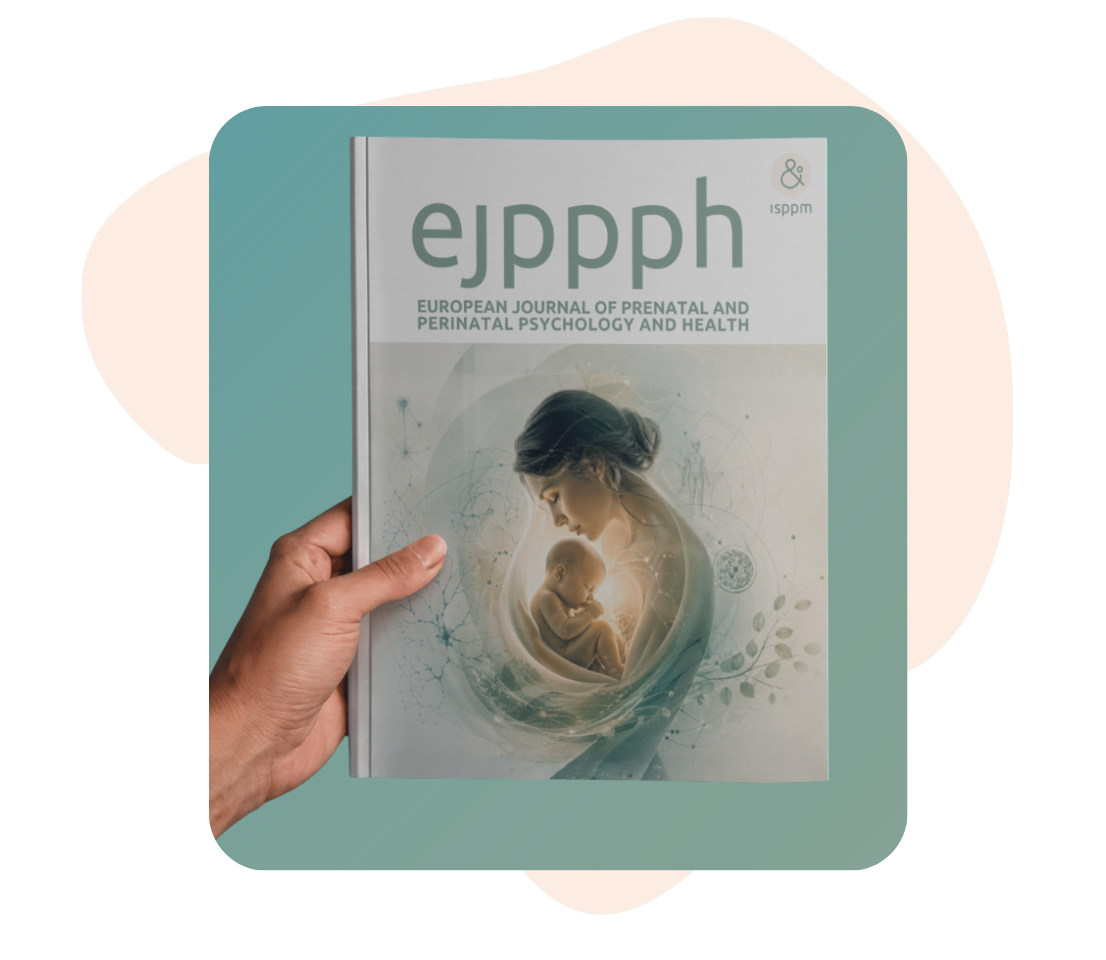
ISPPM Online Journal ‘Pre- and Perinatal Psychology and Health’ has come into the world
The first issue of the new journal, with the predecessors of the yearbooks and international journal of pre- and perinatal psychology and medicine, was published in early May! The 2nd issue is in preparation. If you as an author would like to publish an article in the European Journal of Prenatal and Perinatal Psychology and Health (ejppph), we will be happy to send you the template.
For ISPPM members, the publication fee is €100.00 (instead of €200.00 for non-members).
Here is the link where you can register:
https://journal.isppm.ngo/index.php/EJPPPH/de/user/register
AND ON OUR OWN BEHALF:
Many have previously booked the yearbook in the amount of €25/year in addition to the membership fee.
Now there is the ISPPM Online Journal. This replaces the yearbook. Articles are now published in the journal. Upon request, we will send a printed version of all published articles of the journal of one year at the end of the year.
After we sent a separate email regarding this last week, we would also like to ask here whether you would now like to give €25 for the financing of the journal.
Please reply to us by June 20, 2026. If you have not objected by this day, we will assume consent. If the new journal appeals to you, you are cordially invited to contribute €25 to its creation.
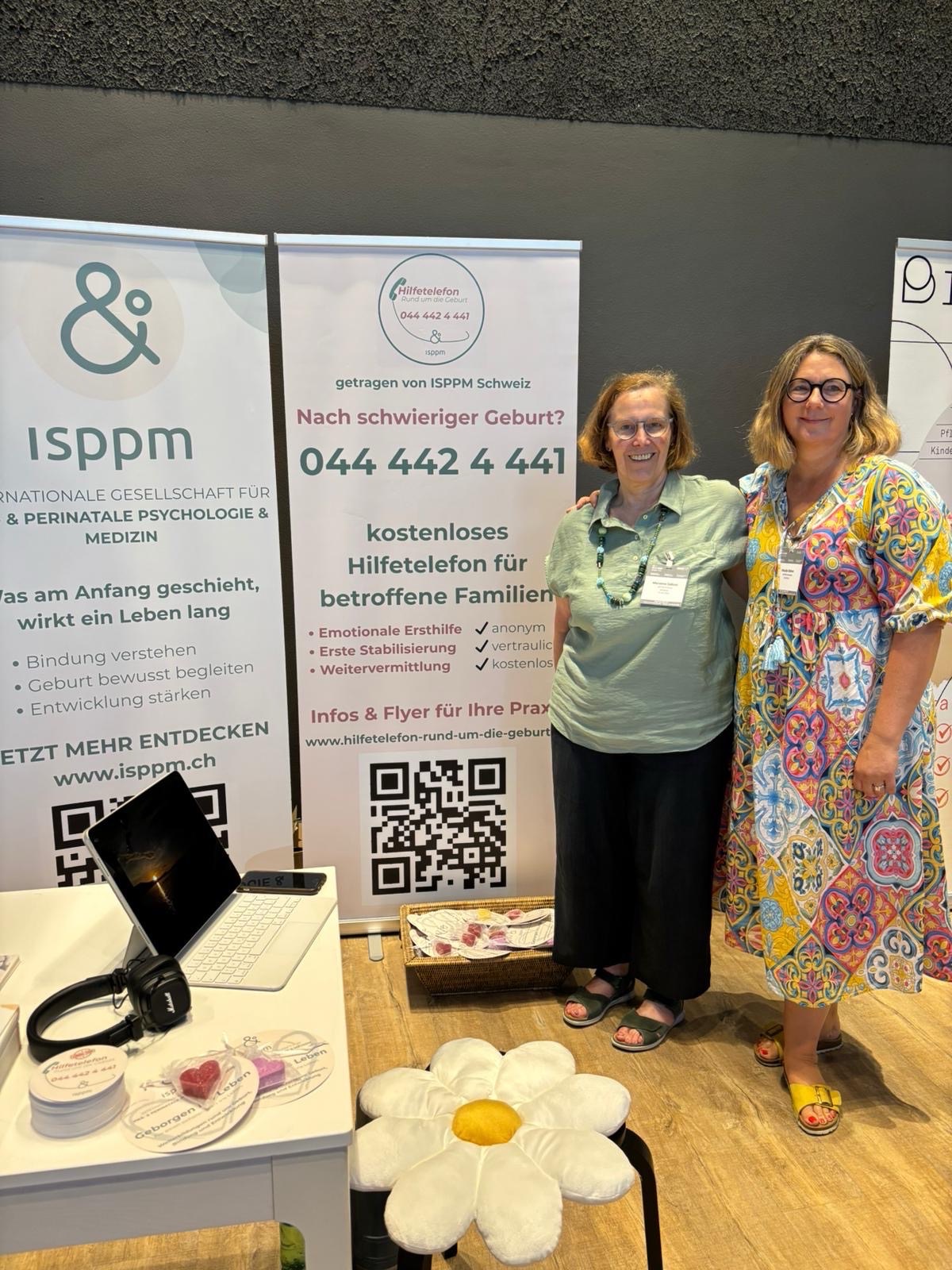
ISPPM Switzerland at the Midwifery Congress
Here is the report from ISPPM Switzerland:
ISPPM Switzerland was represented this year with its own stand at the Midwifery Congress. For us, this was a valuable opportunity to talk to midwives and other professionals, maintain contacts, and forge new connections.
We were able to experience many interesting encounters and present our work, as well as the concerns of ISPPM Switzerland, to an engaged professional audience. Particularly pleasing was the great interest in topics related to pregnancy, birth, early development, and the long-term significance of pre- and perinatal experiences.
The congress has once again shown how important interdisciplinary exchange is and how great the interest is in a holistic view of pregnancy, birth, and early childhood. The audience was particularly interested in our latest project, the help hotline, which was very well received.
We will certainly participate again next year to make ISPPM Switzerland better known.
Homepage: New Therapist Page
The therapist website has also been adapted to the new design. To bring the content up to date, the previous entries will be set to inactive. We will inform you in good time about the further procedure.

Mother Hood’s campaign: ‘Avoid Kristeller maneuver’
At Mother Hood, one topic keeps coming up – with an urgency that can no longer be ignored: the Kristeller maneuver.
Mother Hood is bringing this all-too-frequent medical intervention out of the shadows of delivery room routine and dedicating a separate campaign to it: “Avoid Kristeller maneuver”.
But the association is not only active online: This week Mother Hood was personally at the Federal Ministry of Health (BMG) and also addressed the Kristeller maneuver. In doing so, they made it clear: For many affected mothers, the Kristeller maneuver is obstetric violence, against which the BMG must also take action.
Meeting of the Extended Board 2027
Save the date:
We cordially invite you now to the meeting next year: Extended Board Meeting: Weekend of February 27 and 28, 2027