
ENCA — Annual Meeting of Birth Attendants
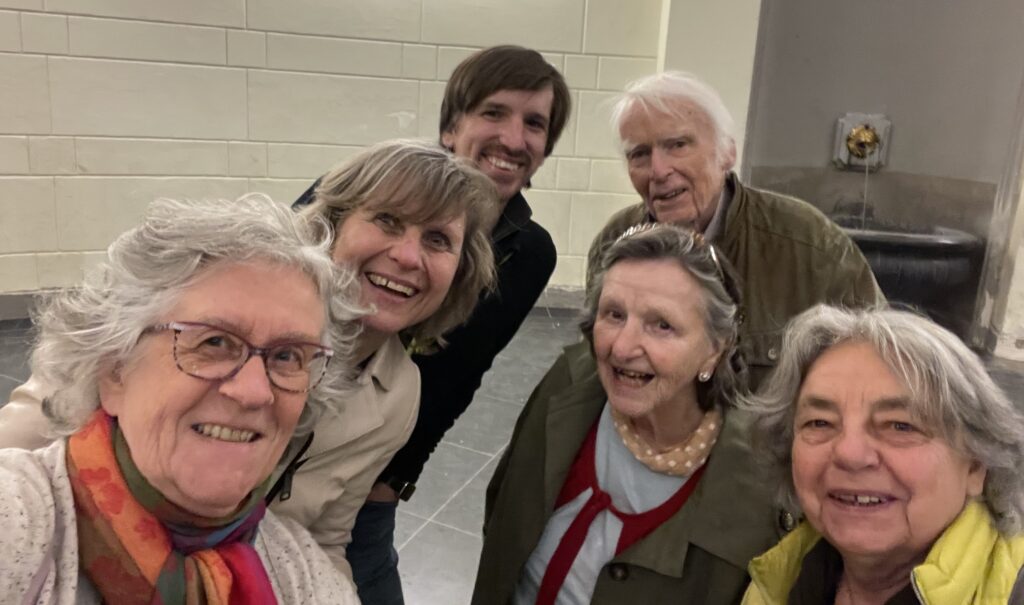
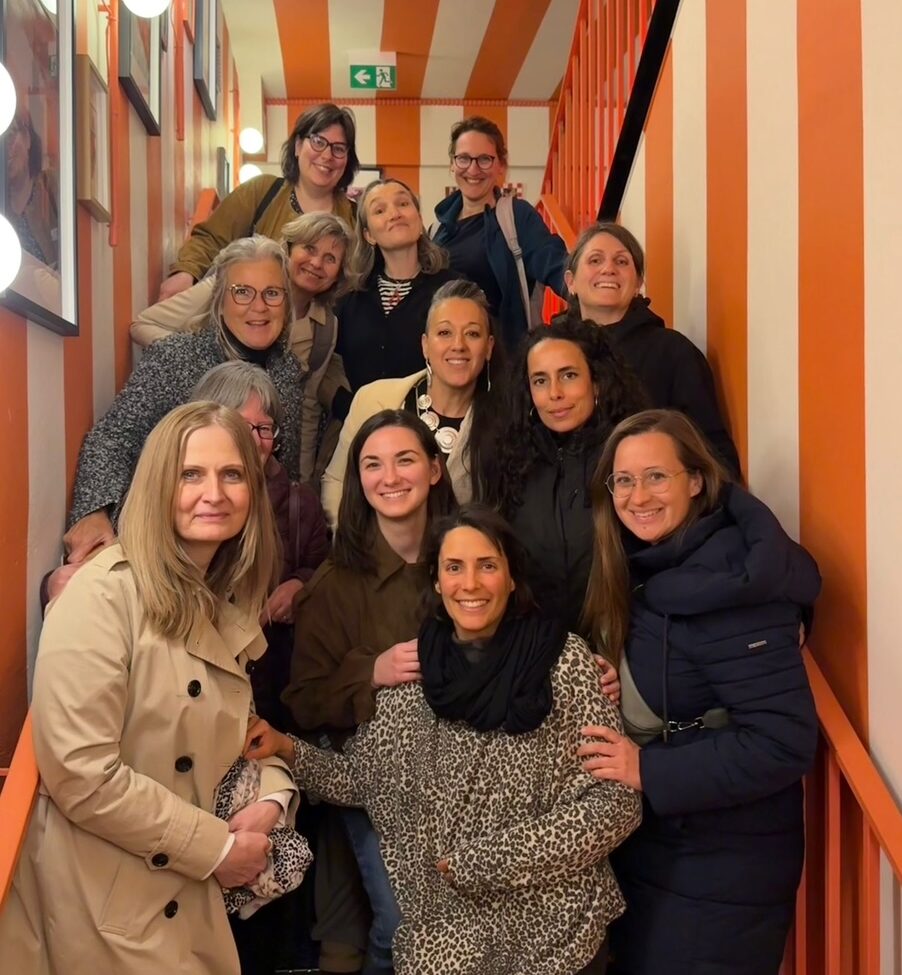
Here is a personal impression from our board member Martina Takacs, who attended for the first time in April:
“It was a privilege to attend this year’s ENCA annual meeting in Warsaw – an encounter that once again showed me the power a network can unleash when built on shared values rather than national borders.
The room was filled with remarkable women: midwives, birth educators, and activists who, for decades, have quietly – and sometimes loudly – persistently woven a pan-European support network for birthing people and their families. For almost 30 years, ENCA’s member organizations have worked within complex and often challenging social and political systems – informing, empowering, and supporting women in one of the most vulnerable moments of their lives.
“Respectful birth should not be a demand women have to fight for – it should be a given.”
What impressed me most was the depth of collective knowledge in that room. Together, these organizations maintain a living archive of European birth history spanning three decades. They offer us a unique perspective to understand how politics, economics, culture, societal norms, and individual rights shape the way we give birth – and how much more still needs to be done.
ENCA deserves to be recognized and known – not only for what they have preserved, but for what they continue to build: a cross-border community of knowledge, solidarity, and commitment, working towards a future where respectful birth is recognized as a fundamental human right!”
During the meeting, reports from the country organizations are presented. This year, we visited a midwifery museum, which greatly impressed us, and the hospital with the highest number of births in Poland at the moment. More than 30 years ago, the chief physician created family-friendly and self-determined conditions for birthing people and established a birth center within this clinic. It was very moving to see what this man made possible; many things are not allowed in most clinics.
IWRC — Get loud and birth proud!
ENCA: International Week for Respectful Birth (IWRC)
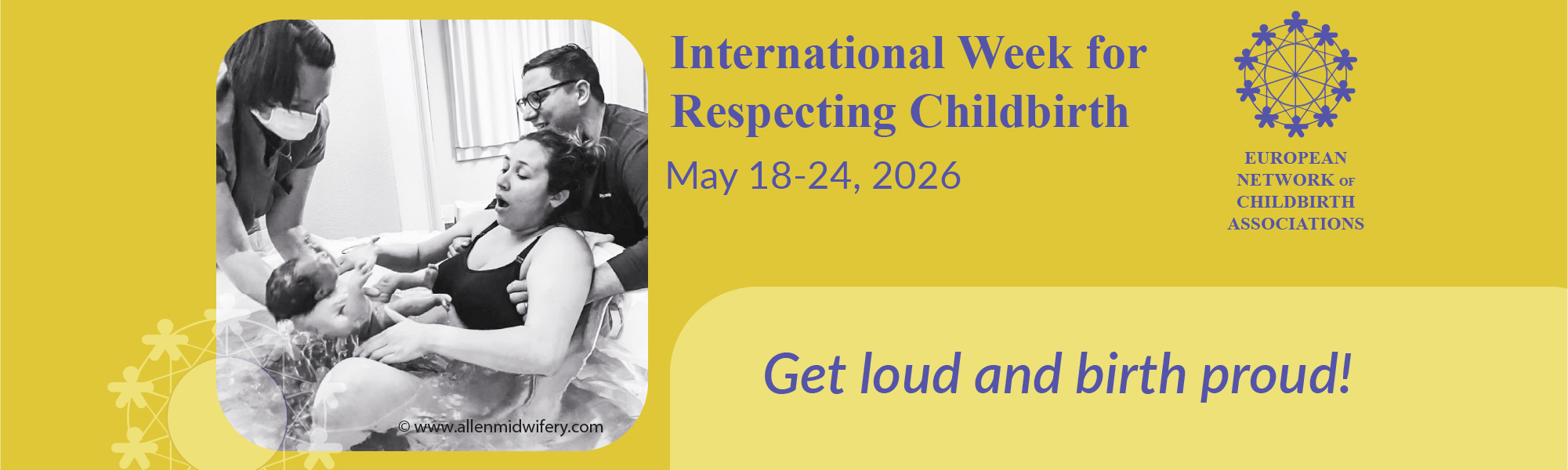
Together, in their respective countries, birth associations organize the “International Week of Respectful Birth” in the third week of May. This year’s motto: “Get loud and birth proud!”
This week provides an opportunity to draw international attention to the topic of promoting respectful birth. The IWRC takes place every May. Depending on the theme, goals are highlighted through public actions. Individuals or groups can then develop concrete steps, using the banner and logo that have been jointly created and made available on the website: posters, brochures, flyers, etc. Depending on the time and commitment of individuals or groups, numerous events of varying scale can be organized: exhibitions, meetings, conferences.
The IWRC was launched in 2004 by the Alliance française pour l’accouchement respecté (AFAR), a French non-profit association completely independent of philosophical, medical, religious, and political ideologies. Since 2011, coordination has been transferred to the European Network of Childbirth Associations (ENCA).

Preview of Network Meetings
There is a new registration process for network meetings:
Non-members will pay €12 starting today (according to the resolution at the 2025 Annual General Meeting). Furthermore, you must now provide the name you have registered with Zoom when signing up. Only then will you gain access to the meeting! This allows us to verify whether all attendees are registered/have paid.
For all who could not attend – the recording of the network meeting with Matthew Appleton on the topic of “Every Baby Has a Story to Tell. An Introduction to Integrative Baby Therapy” is now available in English: https://youtu.be/3b71SALfiUU
May 17, 2026: The announced network meeting on the helpline has been postponed. The new date will be announced in due course.
As part of the international Week for Respectful Birth this year with the slogan “Get loud, birth proud”, the symposium on Oxytocin will take place:
May 20, 2026, 6:30 PM CET
Symposium on the topic of “Bonding Hormone Oxytocin” – Neurobiology of Birth and Relationship in the Field of Tension between Psychotherapeutic Opportunity and Misuse as a Birth Intervention with Prof. Dr. Sven Hildebrandt, Esther Göbel, Dr. med. Ludwig Janus, Maya Kerpenisan, Marita Klippel-Heidekrüger, and Anabel Galster
German, translation into all languages possible. Registration link here
June 4, 2026, 7 PM CET
Franz Renggli: ‘Our Earliest Injuries’
We cannot remember our earliest life, conception, pregnancy, birth, and infancy. However, the traces of these experiences, these earliest imprints, are present in our bodies; our body awareness forgets nothing.
But precisely in this depth, where the earliest injuries and traumas were set, our greatest treasures are hidden: our creativity and our intuition. It is the origin of our entire emotional world, the center of our capacity for love and attachment. It is also the source of all our addiction and destructiveness.
How do early childhood emotional injuries influence and impair our couple relationships and our interactions with our own children – how is it possible to break out of negative spirals and achieve fulfilling relationships with partners and children?
Franz Renggli works with babies and children and their families, as well as with adults who wish to heal their earliest injuries. Registration link to follow
09.07.26, 7.30 pm CET
L. Janus, U. Auhagen-Stephanos, W. Emerson: “Prenatal Psychological Aspects of Artificial Insemination” — further information to follow
July 2, 2026, 7 PM CET
Prof. Dr. Sven Hildebrandt: “Care during the Perinatal Period” — The Challenge of Patience and Competence. Further information to follow
July 16, 2026, 7 PM CET
Regina Bücher: “The First Days of an Embryo and the “Somatic Blueprint”
The first days of an embryo shape its entire further development. Everything is stored in our cellular memory. This imprinting is like a veil through which we perceive ourselves, our lives, and the world.
Yet beneath this “veil,” even deeper in body memory than the imprinting, is our healthy primal pattern, the Somatic Blueprint. Inside, we have a deep knowledge of our health.
This network meeting is about the connection between imprinting and health, starting in the first days of an embryo.
At the same time, this offers a small insight into the foundation of “Integrating Pre- and Perinatal Experiences” in the tradition of Ray Castellino.
19.06. — June 21, 2026: 9th International Attachment Analysis Conference
The title of this conference is “Connected from the Beginning — The Power of the Prenatal Relationship”.
This attachment analysis conference is centered around everything that happened to the child internally since and with the fusion of sperm and egg. György Hidas’s decision, as the founder of attachment analysis alongside Jenö Raffai, that attachment analysis as a preventive method represents a “Copernican revolution,” remains valid.
Look forward to interesting speakers such as Rien Verdult, Ute Auhagen-Stephanos, Klaus Käppeli, Helga Blazy, and many more…

Children’s Rights Network — Children and Adolescents as Victims of Human Trafficking
Online event on May 28 from 10:00 AM to 11:30 AM
Children and adolescents in Germany are affected by human trafficking and exploitation – far more than official figures show. They are forced into sexual acts, labor, begging, or criminal activities. Many are never recognized as victims; some are even falsely classified as offenders instead of being protected.
The German Institute for Human Rights and the Children’s Rights Network cordially invite you to discuss what needs to change on May 28 from 10:00 AM to 11:30 AM (Zoom). Twice a year, we come together for a follow-up event to discuss the implementation of the UN Committee on the Rights of the Child’s recommendations to Germany – with members of the National Coalition Germany (NC), civil society, academia, and politics. This time, we focus on children and adolescents affected by exploitation and human trafficking and ask: Which recommendations have already been implemented? Where is urgent action needed? And what measures must the federal government address before the next state review?

Reduce costs for approx. 700,000 births in Germany
Eva-Maria Müller-Markfort and Irene Behrmann have sent a letter to Ms. Machalet, the chairwoman of the Health Committee of the German Bundestag, outlining how health insurance costs for births can be reduced. For example, they suggest building a birth center in every district. Read more here

June 27–28, 2026 Psychohistory Conference online
“Understanding Wars — and What Can Be Done Against Them”
Does the “nightmare of history” with its enormous violence in societal structures and the succession of wars interact with the equally enormous aspects of violence in parent-child relationships throughout history, i.e., the “nightmare of the history of childhood,” as researched within psychohistory in recent decades?
The answer from psychohistory, the study of psychological aspects in historical events, is a clear “yes,” as comprehensively presented in the book “The Emotional Life of Nations” by the founder of modern psychohistory, Lloyd deMause, and also in the conference proceedings of the “Society for Psychohistory and Political Psychology” in Germany (www.psychohistorie.de, www.mattes.de). You can read more here.

Paracelsus Medical Private University Salzburg: free online expert impulses
The Paracelsus Medical Private University Salzburg has approached us with an inquiry from the Research Institute and Study Program Early Life Care:
One-hour online expert impulses are regularly organized for professionals. The aim is to promote exchange between science and practice and to disseminate current research findings into practice. The research institute works closely with, among others, the Salzburg University Hospital.
Soon, Dr. Antonia Dinzinger, psychologist and attachment researcher, will offer an online expert impulse specifically designed for professionals on the topic:
“Empathic Relationships? Early Attachment, Interaction, and What Smartphones Have to Do With It”
The focus will be on the first years of life and their enormous potential for child development. The expert impulse combines attachment-theoretical knowledge with current research findings on parental smartphone use.
This scientifically sound expert impulse is provided free of charge. The goal is to further promote the interdisciplinary concept of Early Life Care in the field of health promotion and care and to foster professional exchange.
If interested, the link can be requested from our secretariat (elfi.elliot@isppm.ngo).

Feto-maternal Microchimerism
A circular is currently circulating in the media, drawing attention to a wonderful phenomenon; information is available on various websites:
When a woman is pregnant, cells from her baby travel into her bloodstream and then return to the child. This phenomenon, as mysterious as it is touching, has a name: “feto-maternal microchimerism”…
For over 41 weeks, these cells travel, exchange, and intertwine in a silent, almost sacred dance between mother and child. And when the baby is born, many of these cells remain in the mother’s body, imprinted in her tissues, her bones, her skin, and even her brain. A biological memory, an invisible tattoo of motherhood.

Regarding Our Work
The workload in the secretariat and on the board is increasing; we are gaining more recognition in public, universities, and ministries, and receiving many inquiries. These are very interesting challenges, and if you would like to contribute, we would be delighted if you contact us.